SCRAPS (cook what you have)
A Recipe App That Works With What You Actually Have
A passion project about cooking with what you already have, so less food goes to waste and less money goes to delivery.
Standing in Front of the Fridge
Every college student has stood in front of their fridge at 8pm with random ingredients and no idea what to make. The options are order delivery, eat cereal, or spend 20 minutes Googling recipes that need six things you don't have. Usually, those forgotten ingredients end up in the trash. Scraps flips that: type in what you have, and get recipes you can actually make tonight.
Recipe Apps Assume You'll Go Shopping
College students waste food and money because they don't know what to cook with what they already have. Existing recipe apps are built for aspirational cooking, not practical cooking: pick a recipe, then buy everything on the list. That means more spending, more half-used ingredients, and more food thrown away. None of them start with your fridge and work backwards. Scraps does.
Why it matters to me: food waste is one of those everyday problems that adds up. Every wilted vegetable thrown out is wasted money and wasted resources. I wanted to make the more sustainable choice, using what you already have, also the easiest one.
From Fridge to Figma to a Real App
User research. I talked to college students about their cooking habits and how often they throw out food. Almost everyone said they'd cook more, and waste less, if they just knew what to make with what they had. Every existing app had the same problem: you had to already know what you wanted to make.
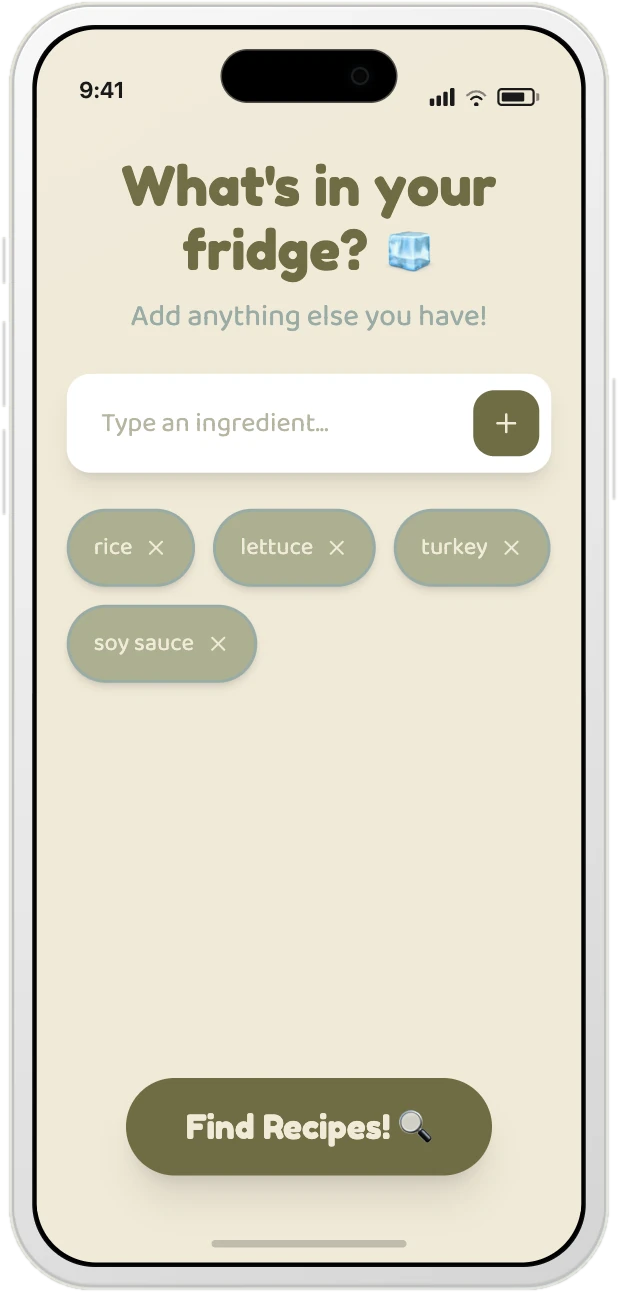
Design in Figma. I designed every screen first: splash, fridge input, ingredient chips, recipe results, and cook mode.
Figma Make and vibe coding. I used Figma Make to turn the static frames into a real interactive prototype, then experimented with vibe coding to build and ship the working app on Vercel. It's a real app anyone can open, not a clickable prototype behind a Figma link.
A Friend, Not a Cookbook
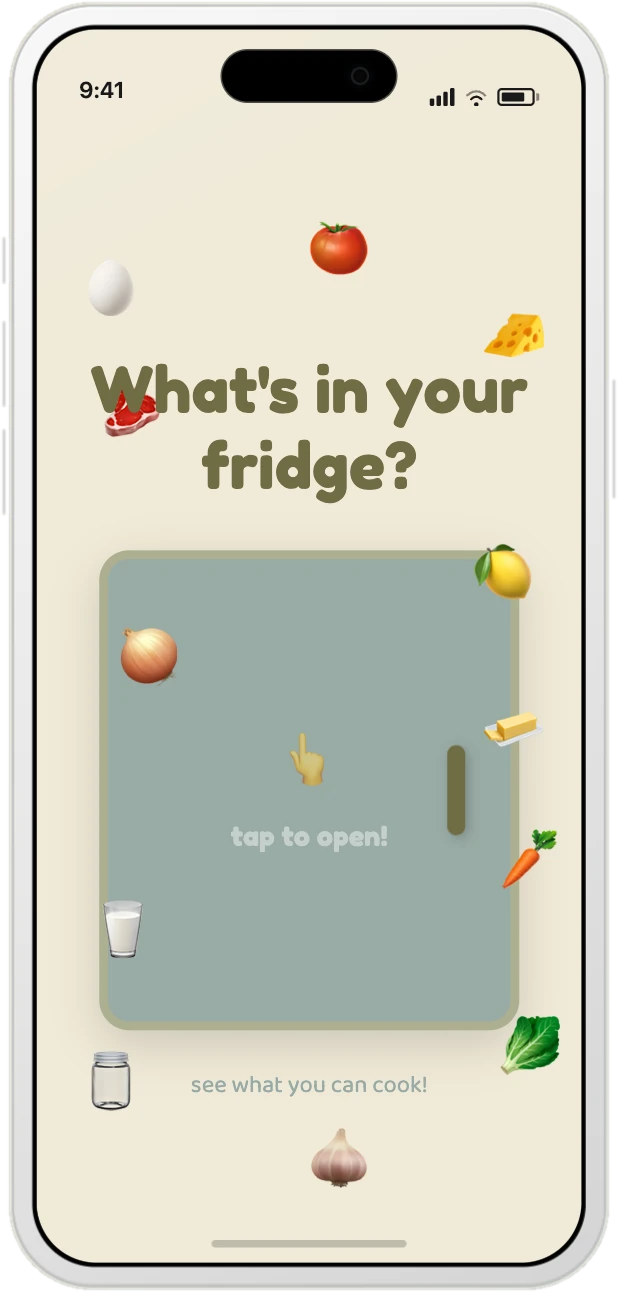
The hero moment. The fridge door "tap to open" interaction tells you how the app works without any onboarding. It's unexpected, a little charming, and instantly clear.
Type. Fredoka, for its rounded, approachable personality. The app should feel like a friend, not a cookbook.
Color. A warm system of cream, olive, and muted earth tones, chosen to feel appetizing and calm rather than clinical. (These are the app's own colors, shown inside its screens. The portfolio keeps its own palette.)
Floating ingredients. The emojis on the splash screen are fun, instantly readable, and different from anything else in the App Store.
Shipped and Live
Scraps is live on Vercel at https://scraps-app-theta.vercel.app/, a real app anyone can open on their phone.
Testing it with friends. I tested it informally by handing my phone to friends and asking them to find something to make with what was in their fridge. The tap to open moment worked the way I hoped: nobody needed instructions to know where to start. Watching them also showed me where to go next, like wanting to save a recipe they liked and come back to it later.
Reflection
Scraps was the first time I took an idea all the way to a live link on my own, and it's where my two worlds actually met. Designing every screen in Figma first made building faster, because the decisions were already made, and experimenting with vibe coding showed me how quickly a design can become something real. It also reminded me that small design choices can nudge everyday habits, like wasting less food and spending less money. Next, I'd add saved recipes, a pantry that remembers what you have, and dietary filters, then test with a bigger group of students.